Bacteria, pesticides, and dangerous chemicals. Surely we need to wash all of them off our vegetables before cooking. But what, exactly, is a rinse accomplishing?
I started asking this question because of roasted broccoli, cauliflower, and Brussels sprouts. Their little crevices trap water, and that water interferes with browning. My solution had been to skip washing clean-looking brassicas that I intended to cook thoroughly. Naturally, this raised questions. What about the people who handled them? What about pesticide residues? Was I buying only organic?
There are several different problems hiding inside the phrase “wash your produce.” Soil is one. Microbes are another. Pesticide residues are a third. They do not all respond to water in the same way.
Before getting into the chemistry, here is the good news: you can wash those water-trapping vegetables and still get excellent browning.
Key Takeaways
- A salad spinner and paper towels help washed brassicas dry sufficiently for excellent browning.
- Washing reduces contamination but does not sterilize produce or replace thorough cooking.
- Pesticide removal depends on the specific chemical, crop surface, and washing method.
- Baking soda research on apples does not establish a universal treatment for all produce.
Table of Contents
- How to Wash and Dry Vegetables Without Sacrificing Browning
- My Problem With Washing: What Is the Return on the Effort?
- What About Bacteria on Produce?
- That Waxy Coating Is Not Necessarily Pesticide
- Do I Only Buy Organic Produce?
- Permethrin on Broccoli: Amount and Solubility Matter
- Chlorothalonil: A Different Pesticide Example
- Does Baking Soda Remove Pesticides?
- Does Every Little Bit Help, or Does It Just Feel Helpful?
- What I Wash Thoroughly
How to Wash and Dry Vegetables Without Sacrificing Browning
A salad spinner is not just for lettuce. Somehow, I had never considered using it for cauliflower or Brussels sprouts. Once the idea was suggested to me, I tried it, and it worked beautifully.
- Cut the vegetables into cooking pieces. Put them in the basket of a salad spinner.
- Submerge them in clean water. Then lift out the basket and discard the water.
- Check the quantity. Remove some vegetables if necessary so the lid closes comfortably.
- Give them a preliminary spin. A few turns remove most of the water.
- Empty the outer bowl. You do not need that collected water weighing down the spinner.
- Spin thoroughly again. Remove as much remaining water as possible.
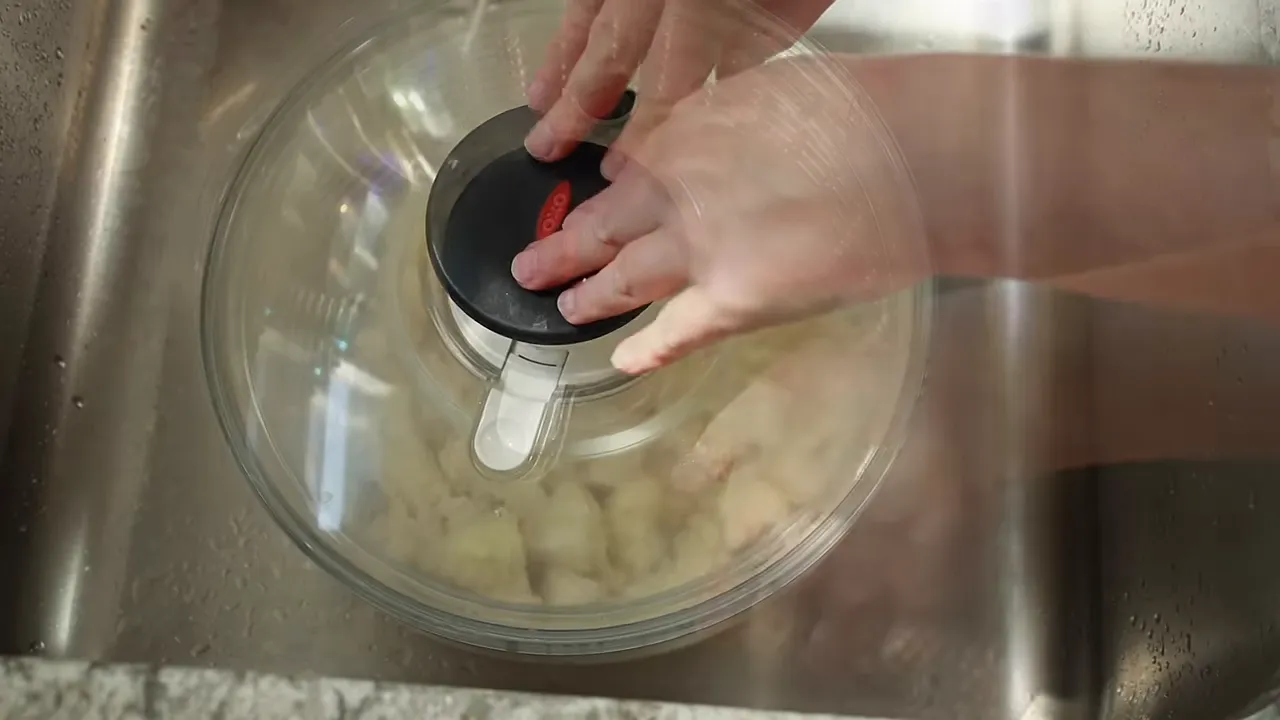
The spinner gets you most of the way there. Paper towels take care of the remaining surface moisture. You have two options:
- For the driest surface: Wrap the vegetables in paper towels, put them in a container, and refrigerate overnight. This works very well, but it requires planning ahead.
- For dinner tonight: Line a baking sheet with paper towels, spread out the vegetables, and leave them for at least five minutes so the towels can absorb the remaining moisture.
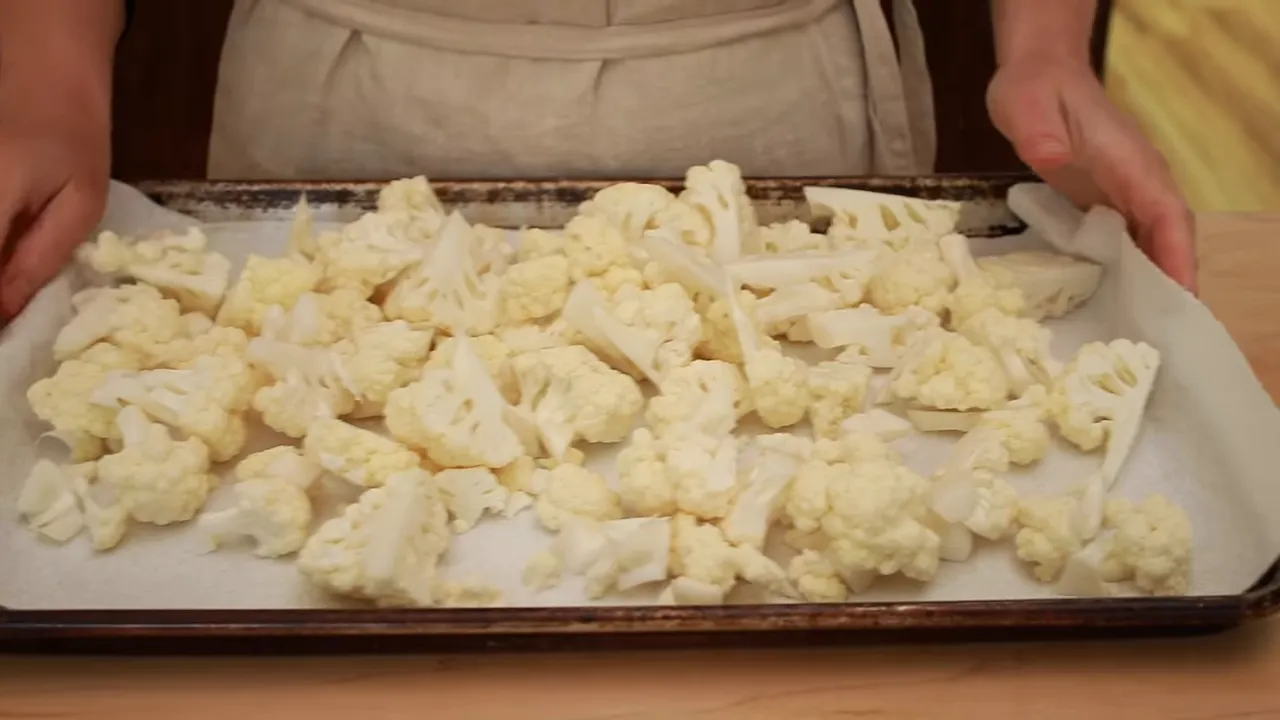
In my test, vegetables dried this way browned every bit as well as the unwashed ones. So washing and browning are not incompatible. The important step is drying.
My Problem With Washing: What Is the Return on the Effort?
Washing is not free. Between rinsing, spinning, and drying, it adds at least five minutes to my preparation. If I cook brassicas four times a week, that becomes an extra 20 minutes.
That is not an enormous amount of time. But I would still like to know what I am getting for it.
Am I removing grit? Reducing microbes? Removing a particular pesticide? Or am I doing something mainly because it feels reassuring? Those questions deserve separate answers, rather than one general instruction to wash everything and stop thinking.
What About Bacteria on Produce?
The idea of other people handling our vegetables is not particularly appetizing. Perhaps someone touched those Brussels sprouts with dirty hands, sneezed near them, or dropped them.
But there is an important distinction between a raw salad and vegetables that will be thoroughly cooked. Thorough cooking is a much more effective microbial control than rinsing. Washing can reduce contamination, but it does not sterilize food.
I wash produce I intend to serve raw. Still, I do not have any rosy illusions that washing makes contaminated lettuce completely safe. If harmful bacteria are firmly attached or inside plant tissue, a rinse may not remove them.
This does not mean cooked vegetables are automatically risk-free. Cooking needs sufficient heat and time, and contamination can spread to hands, utensils, or other food before the vegetables reach the pan.
For a practical household baseline, the FDA recommends washing produce under plain running water before preparing it. That includes produce you plan to cook. My personal shortcut with clean-looking brassicas should not be confused with that official recommendation.
The useful distinction is this: rinsing and cooking are different controls. Neither should be described as a magical guarantee.
That Waxy Coating Is Not Necessarily Pesticide
Have you soaked vegetables and noticed an oily-looking residue in the water? It is tempting to conclude that you can actually see the pesticides coming off.
Not so fast, my friends.
Many plants produce a natural waxy coating called a waxy bloom. It helps retain moisture and provides a protective barrier against insects and microbes. This edible coating can leave an oily-looking residue when vegetables are washed.
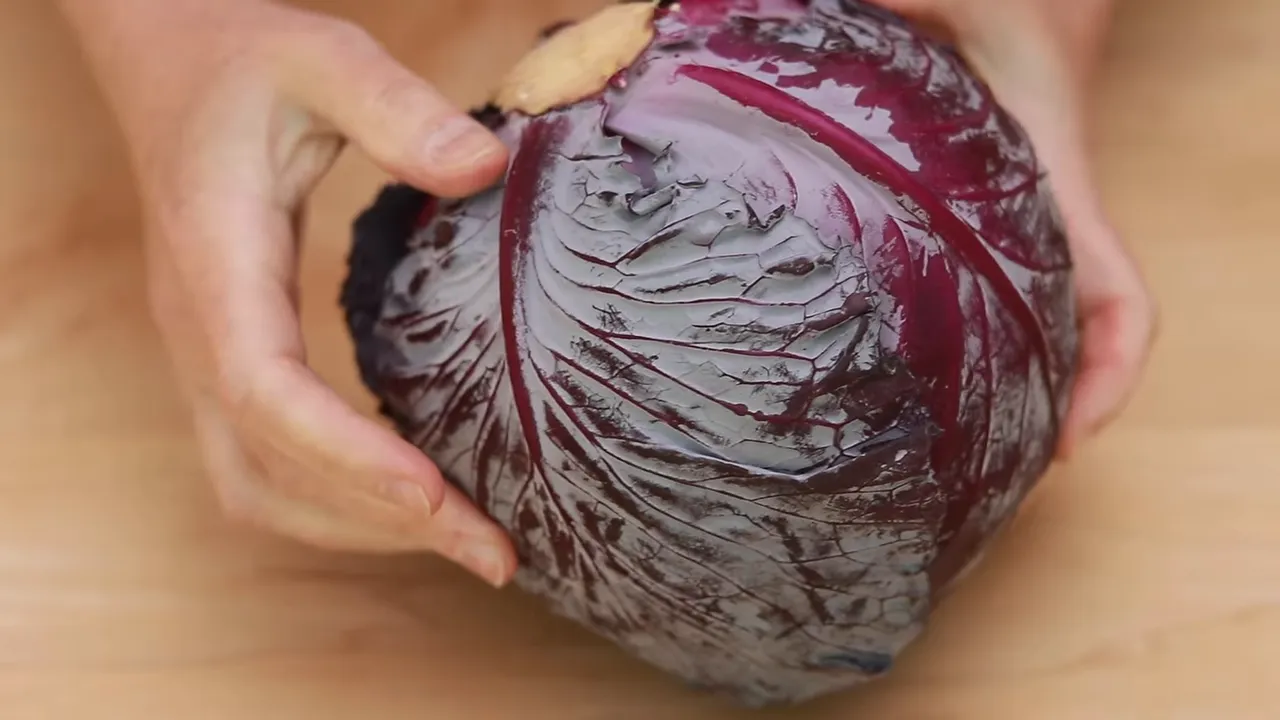
The appearance of the wash water does not tell us which agricultural chemicals, if any, were present. An oily film is not a pesticide test.
Do I Only Buy Organic Produce?
No. Some produce I buy from local farms might be organic, but most of the year I shop at a supermarket and buy conventional vegetables.
To understand pesticide residues better, I contacted my friend Ken Drouillard, a professor of toxicology at the University of Windsor. One of his most useful points was historical: a major change occurred when persistent pesticides such as DDT and dieldrin were restricted or banned, beginning in the 1970s.
In other words, “conventional produce” is not a description of one unchanging set of chemicals. Many modern pesticides break down more quickly than those older, persistent compounds. That does not make every pesticide harmless. It means we need to ask about the particular chemical and the amount of exposure.
In the United States, the EPA sets pesticide residue tolerances, while monitoring includes the USDA’s Pesticide Data Program. Those are different jobs: setting limits and measuring residues.
There is also an important detail when interpreting monitoring results: sample preparation matters. Do not assume every reported result describes untouched, unwashed supermarket produce. Testing programs have their own preparation procedures.
Residues also vary from sample to sample. When a chemical was applied, and how much time passed before harvest and purchase, can make a substantial difference.
Permethrin on Broccoli: Amount and Solubility Matter
Permethrin is an insecticide used on broccoli. If you live in an area with lots of ticks, the name might sound familiar from clothing treatments. It is also used in some mosquito-control products.
It is a synthetic insecticide related to the insecticidal compounds produced by chrysanthemum flowers. But “related to something natural” is not the useful safety test. Dose and exposure are.
Putting residue amounts into perspective
The broccoli example I examined described permethrin as usually below a detection level of 0.01 micrograms per gram, with detected amounts extending up to 100 micrograms per gram.
To make that range easier to picture, I used a portion of approximately one cup, or 100 grams, and compared the exposure with the EPA and World Health Organization benchmarks used in that calculation:
- At 100 micrograms per gram: The calculated daily amounts were about 1.75 portions using the EPA benchmark and roughly one-third of a portion using the more conservative WHO benchmark.
- At 10 micrograms per gram: The corresponding amounts were about 17.5 portions and 3.5 portions.
- Below 0.01 micrograms per gram: Exposure would be much lower than in either of those examples.
These are illustrative exposure calculations, not universal serving recommendations. A calculation like this depends on assumptions, including body weight and the benchmark selected, and it does not account for exposure from every other food.
The point is the scale of the difference. A high-residue sample and a sample below detection are not interchangeable. Nor is an occasional exposure the same question as consuming the same amount every day for a lifetime.
Why plain water has limitations
Permethrin has very low water solubility and an affinity for oily materials. Vegetables have a waxy outer surface, which helps explain why water beads on them rather than spreading evenly.
That makes plain rinsing a limited tool for removing residues associated with the waxy surface. You can scrub a potato. How, exactly, are you going to scrub every little bud on broccoli?
I would not turn this into an absolute claim that washing removes none of it under any conditions. The practical point is narrower: a water rinse cannot be assumed to remove every pesticide effectively.
Chlorothalonil: A Different Pesticide Example
Another chemical used on broccoli is the fungicide chlorothalonil. Yes, the name is a mouthful.
In the example I examined, the high reported residue was 10 micrograms per gram of broccoli. Using the WHO benchmark selected for that calculation, about two 100-gram portions per day would reach the comparison amount. A lower residue level used in the same example corresponded to approximately 70 portions.
Again, those figures illustrate how strongly exposure depends on residue concentration. They are not a prescription for how much broccoli every person can safely eat, and they are not a complete dietary risk assessment.
Timing matters here, too. A fungicide applied well before harvest has time to dissipate before the broccoli reaches the store.
Washing may reduce some surface residues, but its effectiveness depends on the chemical, the surface, and the washing method. Chlorothalonil should not be treated as a simple, readily water-soluble substance. The important lesson is that one pesticide’s behavior does not tell us what every other pesticide will do.
Does Baking Soda Remove Pesticides?
The baking soda recommendation is everywhere. Unlike some kitchen advice, it has an actual study behind it. The trouble starts when a specific result becomes a universal rule.
A University of Massachusetts study on pesticide removal from apples investigated a 1% baking soda solution. Soaking for about 15 minutes substantially reduced surface residues of the fungicide thiabendazole and the insecticide phosmet.
That gives us useful information about those chemicals on apples under the study conditions. It does not prove that the same treatment removes all pesticides from all produce.
- The crop matters. An apple has a different surface from broccoli or Brussels sprouts.
- The chemical matters. The two pesticides studied on apples are not the same ones discussed here for brassicas.
- The treatment matters. Soaking time, concentration, and agitation are all part of the method.
The apple findings may be more relevant to other orchard fruit treated with similar chemicals than to broccoli. They do not establish baking soda as an effective solution for permethrin on brassicas.
America’s Test Kitchen also tested a more practical approach and reported that swirling grapes in a baking soda solution for 30 seconds was as effective in its test. That is considerably easier to imagine doing before dinner than a 15-minute soak.
But it is still a result from a particular test, not evidence that every fruit and vegetable needs a baking soda bath.
Does Every Little Bit Help, or Does It Just Feel Helpful?
“Maybe I am not removing everything, but at least I am doing something.” I understand the appeal. The question is whether that something produces a meaningful benefit.
Suppose you increase your exercise by 100%. Impressive, right? Unless you started at five sessions a year. Ten sessions a year is still a very different habit from regular exercise.
Percentages can sound important while hiding the size of the actual change. Similarly, removing a percentage of an already tiny residue does not, by itself, demonstrate a measurable health benefit.
I think complex environmental problems need systemic solutions: appropriate chemical use, regulation, monitoring, and enforcement. A household rinsing ritual cannot substitute for those.
The pandemic offered plenty of examples of the difference between effective protection and reassuring rituals. Wearing a mask briefly to enter a restaurant, then removing it throughout a meal, was not equivalent to consistently wearing a well-fitting respirator. The broader lesson is not that precautions are useless. It is that the details of a precaution determine what it can accomplish.
That is what I mean by safety theater: a ritual can make us feel protected without necessarily delivering the protection we imagine. The answer is to examine the ritual, not to abandon useful food-safety practices.
What I Wash Thoroughly
My relaxed approach was specifically about clean-looking broccoli, cauliflower, and Brussels sprouts that I intended to cook. It was never a general declaration that produce does not need washing.
Soil is a very good reason to wash. It feels disgusting between your teeth, and it can carry contaminants you do not want in dinner.
Here is where I am quite thorough:
- Leeks: I wash between every layer, where grit likes to hide.
- Leafy greens: I submerge them in water and spin them dry.
- Root vegetables: I scrub them thoroughly under water.
- Mushrooms: If they are covered in soil, I wash them. The old prohibition against washing mushrooms does not persuade me to eat dirt.
- Produce served raw: I wash it, while remembering that washing is not sterilization.
If you prefer the straightforward household rule, follow the FDA recommendation to wash produce under running water, then dry it well. For brassicas headed to a roasting pan, a salad spinner and paper towels solve the browning problem.
My message is not “never wash vegetables.” It is to understand what you are trying to remove, choose a method that addresses it, and recognize what that method cannot do. As usual in cooking, the devil is in the details.
|


