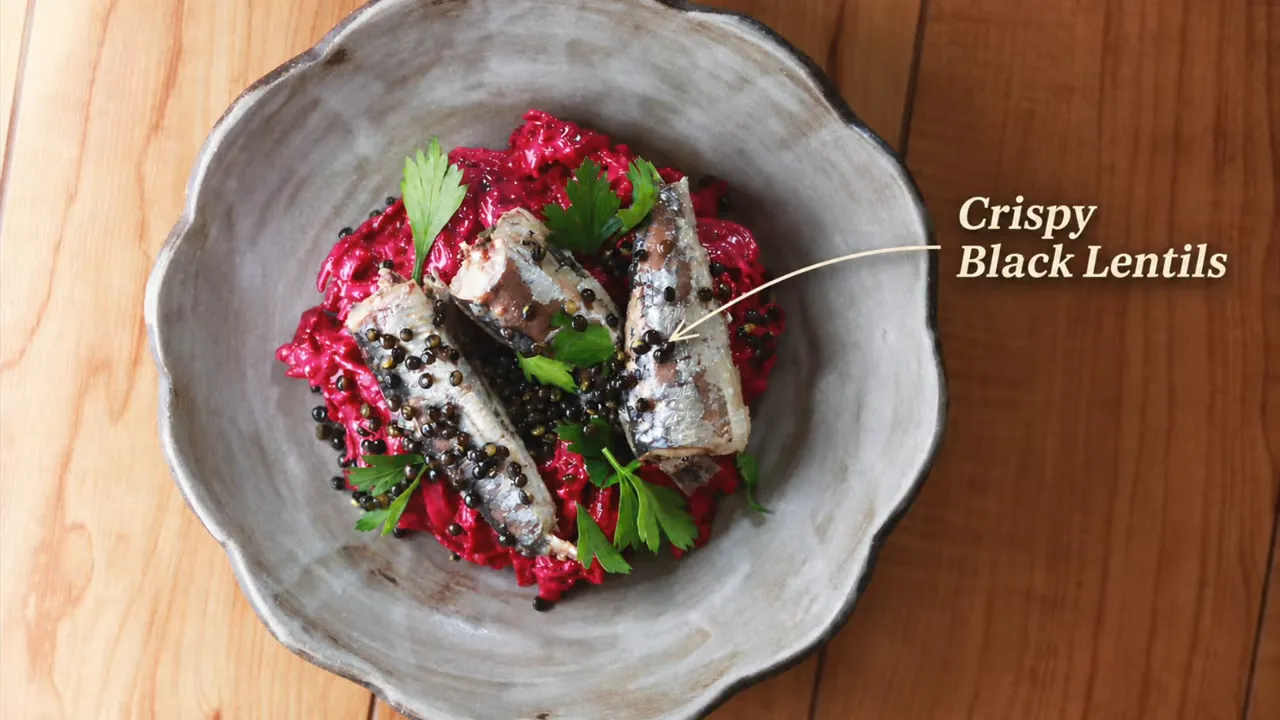
The little black pearls on my lunch were not caviar. My expense account does not extend to that. They were crispy black lentils, scattered over canned sardines on a bed of grated beets, pickled red onions, and tahini yogurt dressing.
Even without the caviar, it was the best workday lunch I’d had in months. And I have Becky Selengut’s cookbook, Lettuce Riot, to thank for it.
Why Becky Selengut’s Cookbooks Work So Well
Becky is my Seattle soulmate: a cooking instructor who also writes about food. There is an important distinction between writing a cookbook and occasionally teaching a class to promote it, and writing a cookbook that captures what you teach in real life.
Becky’s books feel like the second kind. She anticipates my questions. She understands not just how to make something work in her own kitchen, but how to explain it to someone who doesn’t have her skills.
She is also ridiculously funny. An existential crisis may not seem like a problem a cookbook can solve, but Becky makes a very convincing attempt.
I love all her books. Lettuce Riot, though, fits the way I cook particularly well.
Cooking Should Feel Like Playing With Legos
Give me a box of Lego pieces, and I’m happy. Give me detailed instructions for constructing the Taj Mahal, and suddenly I’m overwhelmed.
That is often how I feel about recipes. Following a long sequence of instructions can take the pleasure out of cooking. I’d rather have useful pieces and decide what to build with them.
The dressings and toppings in Lettuce Riot give me exactly those pieces. The book provides components, then offers plenty of inspiration for combining them. It feels more like an invitation to play than an obligation to follow directions.
This is also closer to how everyday cooking actually works in my kitchen. I rarely begin with a completely blank slate. There is always something in the refrigerator that needs to be used. The question is not necessarily, “Which recipe shall I make?” It is, “What can I make with what I already have?”
How Leftover Components Became a Five-Minute Sardine Lunch
I started by making several components from Becky’s book to recreate the salad on its cover. Afterward, I had roasted beets, tahini yogurt dressing, and pickled red onions left over.
Those leftovers became lunch:
- Grate the roasted, peeled beets.
- Mix them with tahini yogurt dressing and pickled red onions.
- Stir in some grated garlic.
- Spread the beet mixture on a plate and arrange canned sardines on top.
- Finish with crispy black lentils.
No precise proportions were necessary. The components were already prepared, so turning a can of sardines into a rather glorious lunch took about five minutes. That is assembly time, not the time required to prepare everything from scratch.
The crispy lentils started with chickpeas
Becky’s crispy chickpeas inspired the lentils. Lentils are smaller, so they turn crisp faster and are a little easier to get right.
Crispy legumes were not previously part of my regular repertoire. Now they are. I didn’t need to reinvent my cooking; I needed a few new pieces to play with.
A jar of pickled onions earns its refrigerator space
Becky also convinced me to keep pickled red onions on hand. They improve as they sit during their refrigerated storage time, and no, a covered jar does not make the refrigerator smell like onions.
Another component I’m eager to try is pickled golden raisins. I usually microwave raisins to plump them before using them. Pickling accomplishes two things at once: it makes them plump and gives them acidity. That is a very useful little piece to add to the box.
Three Components to Make and Mix
These recipes are adapted from Lettuce Riot. They are the starting pieces behind my beet and sardine lunch, but there is no requirement to assemble them exactly as I did.
Tahini Yogurt Dressing
The grated garlic is my addition to Becky’s dressing.
- 1 lemon, zested and juiced
- 1 cup whole-milk Greek yogurt
- 1/2 cup extra-virgin olive oil
- 3 tablespoons tahini
- 1 teaspoon honey
- 2 garlic cloves, grated on a Microplane zester
- Salt and pepper to taste
Process everything in a blender until smooth. Taste and adjust the salt and acidity.
Pickled Red Onions
- 1 small red onion, cut into very thin half-moons
- Salt
- Red wine vinegar
- Sprinkle the onion very generously with salt and toss to combine.
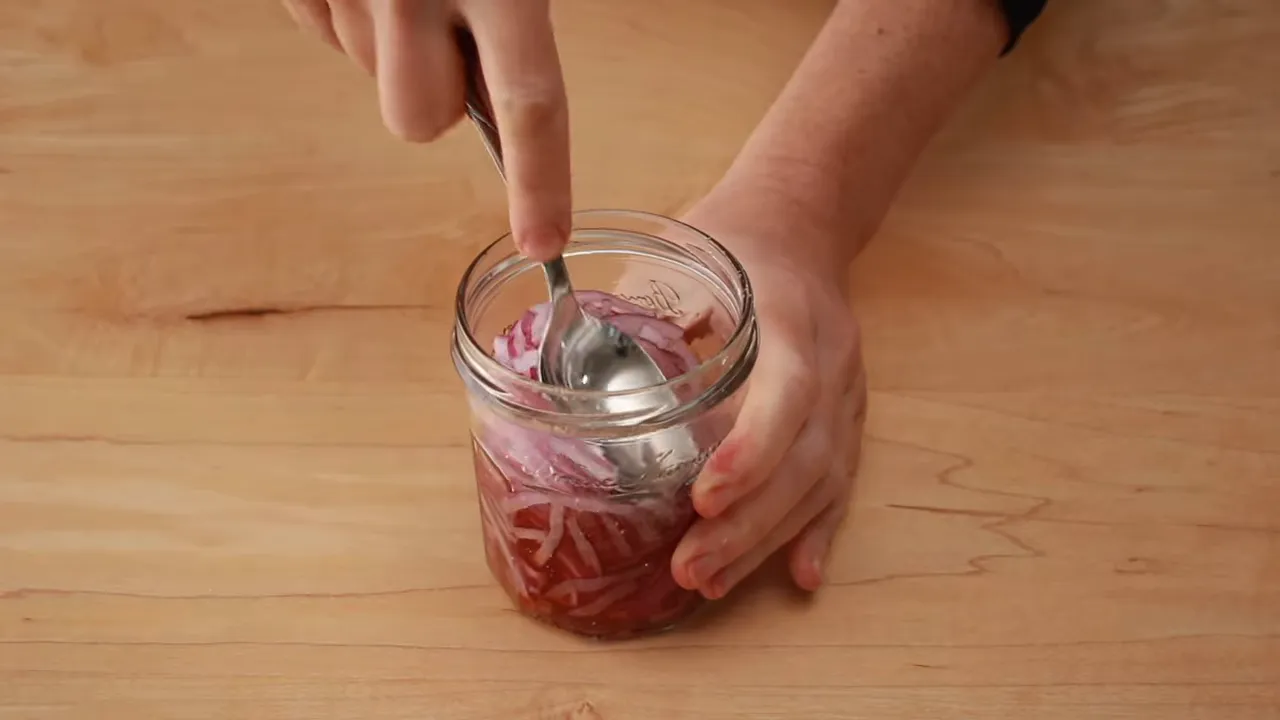
- Transfer to a clean glass jar.
- Add enough red wine vinegar to reach about halfway up the onions.
- Press the onions down with a spoon until they are submerged. Add more vinegar if necessary.
- Cover and refrigerate for at least a few hours and up to one week.
Roasted Beets
- 1 pound beets
- 1 tablespoon olive oil
- Salt
- Water, enough to cover the bottom of the baking dish by about 1/4 inch
- Preheat the oven to 400°F.
- Trim the stems and roots from the beets and wash the beets well.
- Put them in a medium baking dish and toss with the olive oil and salt.
- Add about 1/4 inch of water to the dish and cover tightly with foil.
- Bake until the beets are just tender when pierced with a knife, about 45 minutes.
- When cool enough to handle, rub off the skins with your hands.
With these components ready, the beet mixture for the sardines is only a matter of grating, mixing, and tasting.
Potato Chips in Potato Salad? Absolutely.
Of course, Lettuce Riot is not just a collection of dressings and toppings. It also offers classics with a twist, salads that pack well, and combinations that get your own ideas moving.
One that knocked my socks off was potato salad with potato chips.
I can’t remember encountering potato chips in a salad before. So I borrowed the idea for Olivier, the Russian potato salad classic. The result was ridiculously good.
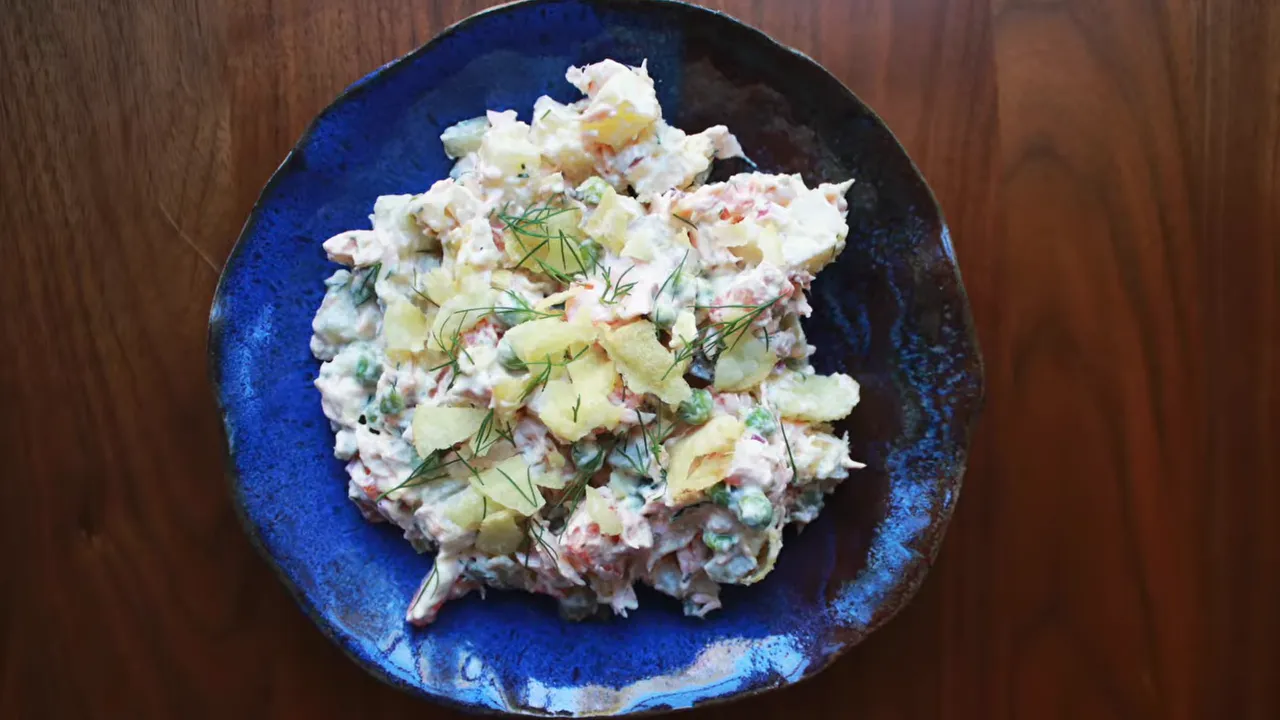
In retrospect, it makes perfect sense. Creamy potatoes and crispy potatoes in the same bite: what is not to love? But I would not have thought to put them together myself.
That is what I want from a cookbook. Not just a finished dish to reproduce, but an idea that changes what I do with food I already know.
A Cookbook for Improvisers and Cautious Cooks Alike
If opening the refrigerator and figuring out what to make sounds like fun, Lettuce Riot gives you more possibilities to work with.
If you need recipes to feel confident, its useful components offer a gentler path toward improvisation. Make a dressing. Pickle an onion. Try a crispy topping. You don’t have to invent an entire meal at once.
You can find Becky Selengut’s Lettuce Riot through this affiliate link.
For me, the book’s greatest success wasn’t simply helping me recreate a beautiful salad. It was making the next lunch better, using what was already in the refrigerator. A few good components, a can of sardines, and permission to play can go a long way.


