Does an apple belong in Shuba? Absolutely. And if herring is not your thing, smoked salmon belongs there too. I realize this might get me into trouble with the traditionalists, but both are delicious choices.
Shuba means “fur coat,” and herring in a fur coat is a cold, layered appetizer made with potatoes, beets, onions, eggs, and mayonnaise. The fish is salty, the beets are sweet, and the mayo is tangy. Together, they are a beautiful combination.
If you know Peruvian causa, the idea is similar, but the vegetable texture is different. In causa, the potatoes are mashed. In Shuba, the vegetables are grated. Those little shreds, held together with dressing, give the dish its character.
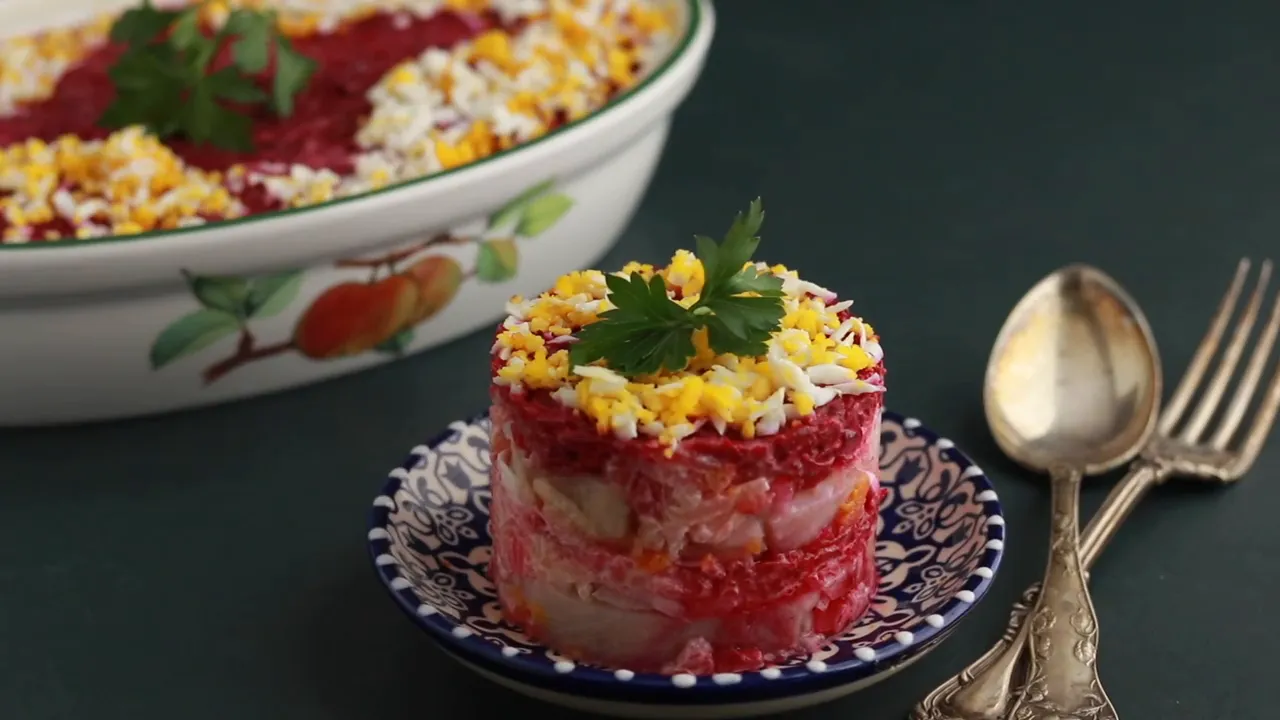
Table of Contents
- Why I Add an Apple
- Choosing Herring or Smoked Salmon
- Ingredients and Equipment
- Cook, Cool, and Grate the Vegetables
- Make the Dressing and Season Each Component
- How to Layer Shuba
- Garnish Just Before Serving
- A Final Word About Measurements
Why I Add an Apple
You would never take a bite of this Shuba and think, “Ah, apple.” It blends into the other ingredients, making the dish juicier and balancing the saltiness of the fish.
My family did not make Shuba with an apple. This is a trick I learned from one of my students, so I cannot blame childhood nostalgia for my enthusiasm. With iconic dishes, we all tend to believe the version we grew up with is the best. Here, I happily abandoned mine.
Use a firm apple with a good sweet-tart balance, such as Honeycrisp. You only need about 50 grams of peeled apple, roughly the size of one egg. This is a supporting ingredient, not an apple salad.
Choosing Herring or Smoked Salmon
My first choice for traditional Shuba is salted herring, not pickled herring. An Eastern European grocery store is a good place to look. The herring commonly sold in American supermarkets is pickled, which I do not particularly enjoy. If you like it, you can certainly use it.
For this dish, buying deboned matjes herring fillets in oil is perfectly reasonable. Choose an unflavored variety, often labeled “original.” Dry the fillets and cut them into bite-size pieces. You will need about 300 grams of prepared herring.
If you are shopping at a regular supermarket, my favorite alternative is 200 grams of smoked salmon, the silky, thinly sliced kind you would put on a bagel with cream cheese. Once chopped and layered with the other ingredients, its texture and flavor work remarkably well here. I use less salmon because I find it saltier and prefer a thinner layer.
For more detail on brands and preparing whole fish, see my guide to buying and deboning herring.
Ingredients and Equipment
Use a serving dish with a capacity of about 4 to 6 cups and a depth of roughly 2 inches. Individual ring molds or a springform pan also work. Individual portions are cute, but assembling them is a project. I usually prefer one big dish.
For the Dressing
- 130 grams mayonnaise, about 2/3 cup
- 2 teaspoons freshly squeezed lemon juice, plus more to taste
- 1 teaspoon Dijon mustard
- Salt to taste
For the Layers
- 400 grams beets, about 2 medium
- 400 grams boiling potatoes, such as Yukon Gold or Red Bliss, about 2 medium
- 40 grams very finely diced white onion, about 1/4 onion
- 1 to 2 tablespoons freshly squeezed lemon juice, for the onion
- 2 hard-boiled eggs, peeled
- 50 grams peeled Honeycrisp apple, or another firm sweet-tart variety
- 300 grams salted herring, or 200 grams smoked salmon, chopped into bite-size pieces
- Salt to taste
One lemon should provide juice for both the dressing and the onions. You will also need foil, a baking sheet or baking dish, a flat rack, and a grater with large holes.
For shopping, two 250-gram packages of deboned herring in oil should give you enough fish, with some potentially left over. If buying whole herring, buy two fish. For smoked salmon, two 4-ounce packages will provide enough.
Cook, Cool, and Grate the Vegetables
- Preheat the oven to 350°F (180°C), with a rack in the middle.
- Line a baking sheet with foil to catch any spills, then set a flat rack on top. The rack keeps the bottoms of the vegetables from browning.
- Scrub the beets and potatoes well. Wrap the beets together in one piece of foil and the potatoes in another.
- Place both packets on the rack and bake until tender, about 1 1/2 to 2 hours. Check the potatoes and beets separately, since they may finish at different times.
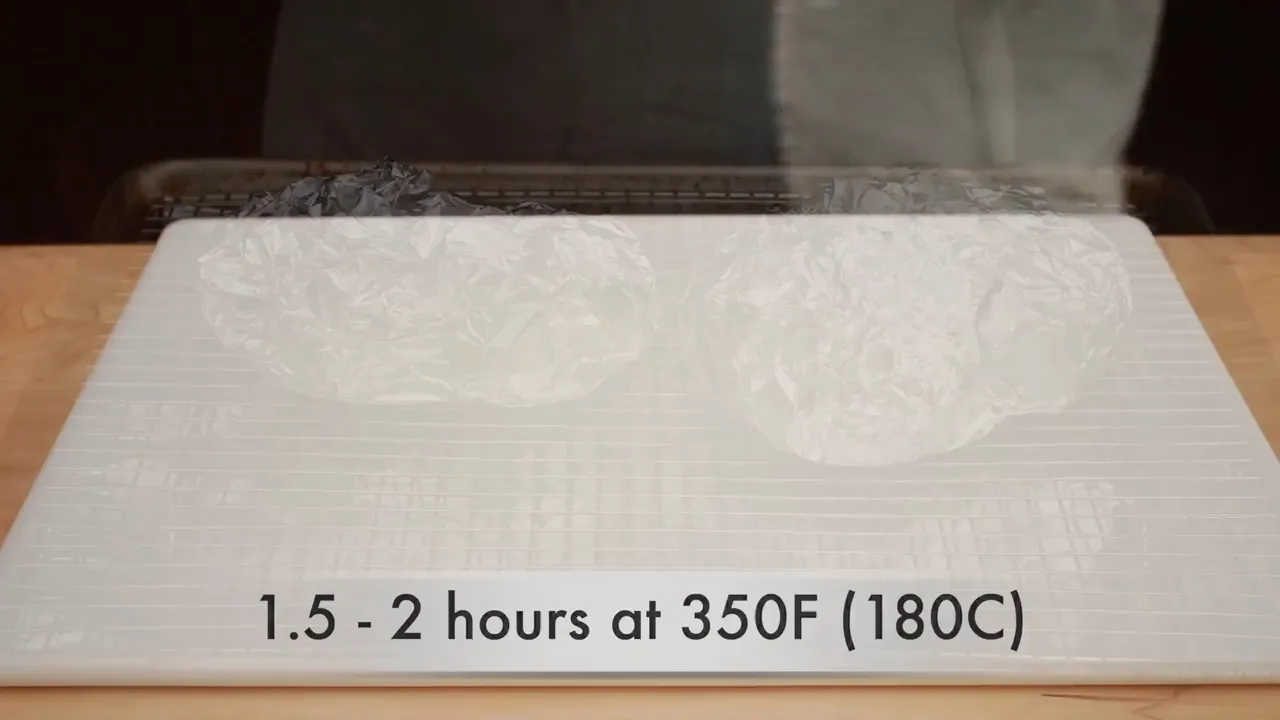
Do not expect cooked potatoes and cooked beets to feel identical. Potatoes will be softer. What matters is that each vegetable has a consistent texture from the outside to the center.
Push a knife through each one. If it slips through the outside but meets resistance in the middle, keep cooking. When the resistance is even all the way through, it is ready.
Unwrap the vegetables and let them cool completely. Peel the potatoes with a paring knife. Cut the tops off the beets and rub off their skins with your hands.
Grate the potatoes on the large holes of a grater into one bowl, then grate the beets into another. Ideally, the potatoes should be tender but still able to hold some texture rather than collapse into mash.
Hard-boil and peel two eggs using your preferred method. If you need one, here is my method for cooking hard-boiled eggs. One egg goes inside the dish; the other is reserved for the final garnish.
Make the Dressing and Season Each Component
Mix the mayonnaise with 2 teaspoons lemon juice, the Dijon mustard, and a little salt. Taste it and add more lemon juice or salt as needed.
I use Hellmann’s mayonnaise from a jar, not the squeeze bottle. I find them quite different. Homemade mayonnaise is also welcome, as is any mayo that tastes good to you. If you want to explore those options, I have guides to making mayonnaise and choosing store-bought mayonnaise.
Divide the dressing between the potatoes and beets, adding enough to make both pleasantly creamy. Season each bowl with salt.
- Fold the potatoes gently. You want dressed shreds, not mashed potatoes. Do not be stingy with their dressing; they should not taste dry.
- Mix the beets thoroughly. They are sturdier and do not require the same delicate treatment.
- Taste both separately. Each should have a good balance of salt and acidity before you start layering.
The exact amount of dressing you need will vary with your vegetables. The goal is not to empty a precisely measured bowl of mayo at all costs. The goal is vegetables that taste good.
Divide the dressed potatoes into three portions and the dressed beets into two portions.
Prepare the Onion
Dice the white onion very finely, taking your time. Toss it with 1 to 2 tablespoons lemon juice and salt.
The onion variety matters here. White onion gives you crunch and brightness without too much pungency. Red onion is a little more assertive, and yellow onion is much too strong for my taste in this dish.
How to Layer Shuba
Some people make just one layer of each ingredient. I much prefer repeating the layers so the flavors can mingle throughout the dish. The apple appears only once, in the middle.
Build the layers in this order:
- One-third of the potatoes. Spread evenly across the bottom of the dish.
- Half of the herring or smoked salmon. Distribute it over the potatoes.
- Half of the onions. Sprinkle them evenly over the fish.
- Another third of the potatoes. If they clump, use your fingers to separate them into small dollops before spreading.
- Half of the beets. Spread into an even layer.
- One grated hard-boiled egg. Grate it directly over the beets.
- The grated peeled apple. Use roughly the same amount of apple as egg.
- The remaining fish.
- The remaining onions.
- The final third of the potatoes.
- The remaining beets. Smooth the surface.
Clean the edges of the serving dish, cover with plastic wrap, and refrigerate for at least 3 hours, ideally overnight. Keep the second hard-boiled egg in the refrigerator for garnishing later.
Garnish Just Before Serving
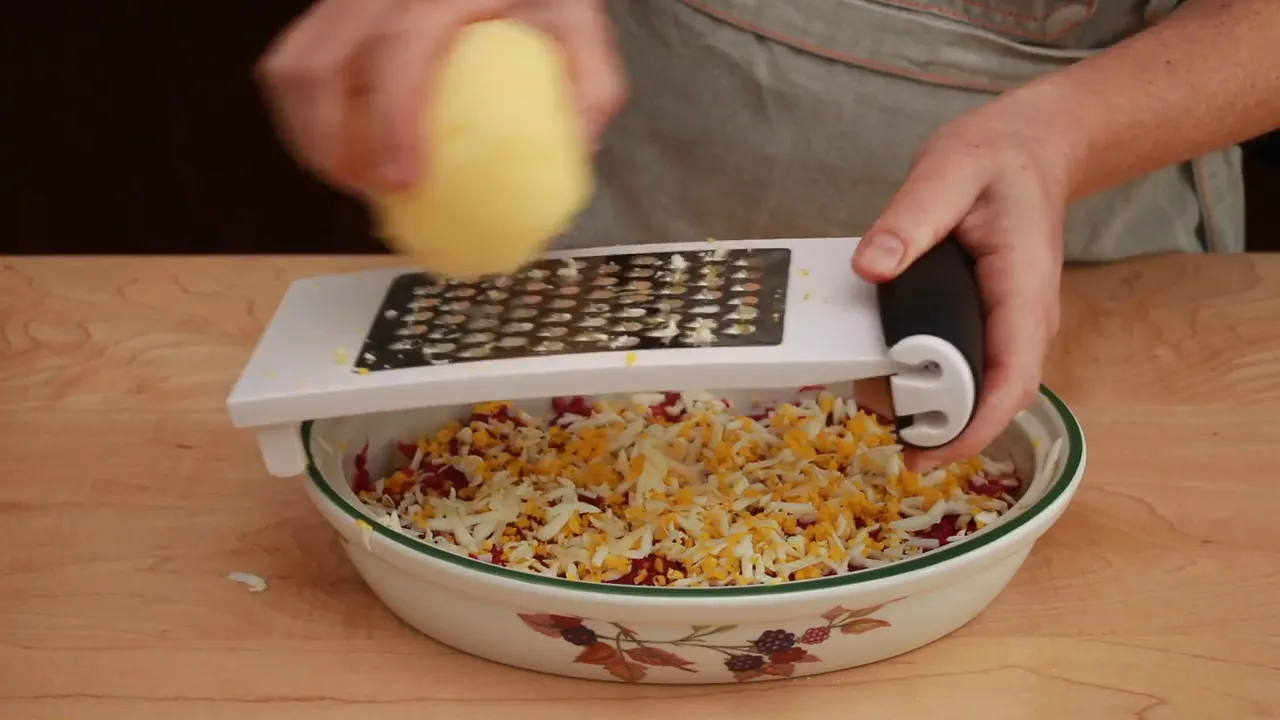
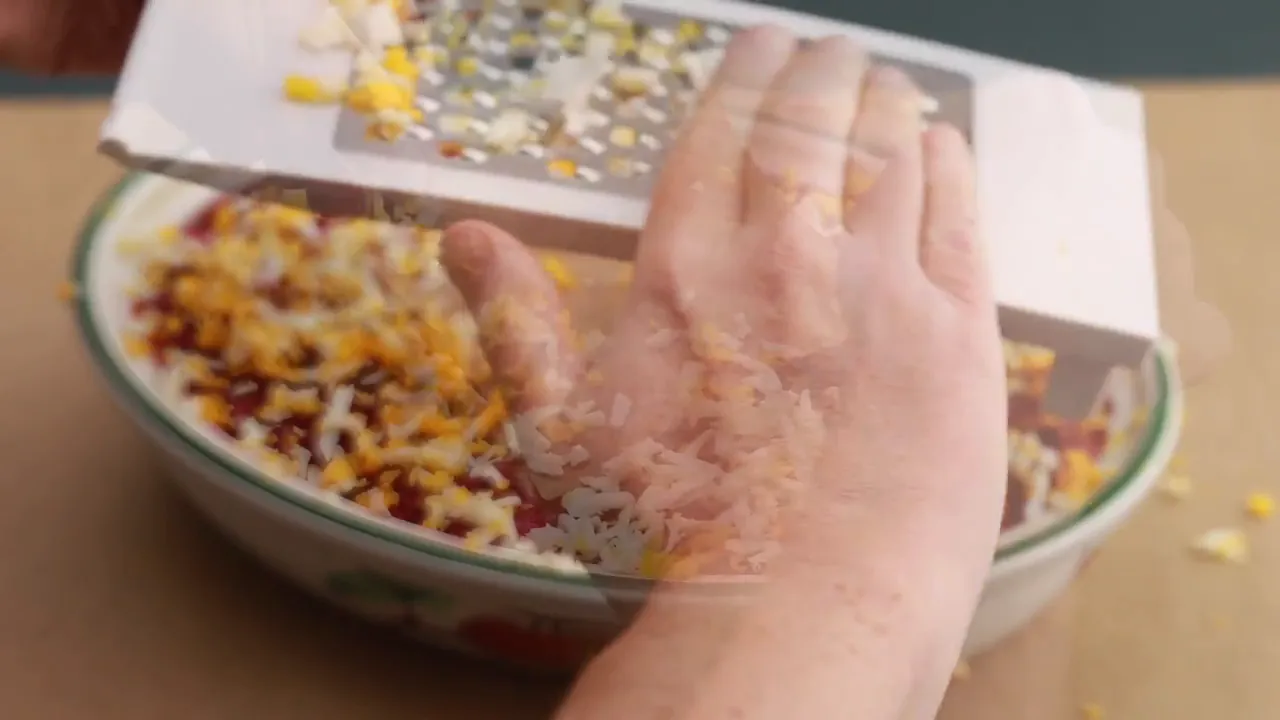
Right before serving, grate the reserved egg over the top. If you add it before the long chill, it will become pink and wet from the beets.
For a little decoration, cover part of the surface with parchment or foil before grating on the egg. Lift away the covering to reveal a design against the beet layer. It is a simple trick, but a very cheerful one.
A Final Word About Measurements
In real life, I do not weigh everything for this kind of dish, and you probably will not either. Beets, potatoes, and herring come in inconveniently different sizes. Giving you a number does not mean your two potatoes will magically weigh exactly that much.
This is not baking. Use the quantities as a guide, taste each component, and use your judgment. Keep the potatoes creamy, the onion fine, and the apple modest. Give the assembled Shuba time in the refrigerator, then finish it with freshly grated egg. That is a fur coat worth making.


