My students are often surprised that I don't normally use a thermometer to test fish for doneness. I peek inside. Yes, I know. For someone who is usually obsessed with accurate measurements, this seems completely out of character.
But a thermometer reading is only useful if you can measure the right spot, know what temperature you're aiming for, and predict how much the fish will continue cooking after you take it off the heat. With fish, that's quite a few variables to sort out when a fork can tell me what I need to know.
Still, habit isn't a particularly good scientific argument. So I tested salmon, swordfish, and cod, comparing my usual visual cues with thermometer readings. The results were eye-opening.
Key Takeaways
- Fish continues cooking during rest, so off-heat and final target temperatures are different.
- My preferred final temperature varies by fish, with salmon lower than swordfish or cod.
- Cooking method and thickness affect carryover, making one universal off-heat temperature impractical.
- A fork suits my texture checks for flaky fish; a thermometer is especially useful for swordfish.
Why Fish Can Be Tricky to Measure
The first problem is thickness. With a piece of fish thinner than an inch, I find it difficult to position the thermometer's sensing area precisely in the very center, where the temperature is coolest. You can certainly insert the probe and get a number. Whether that number represents the coolest part is another question.
What about thicker fish? That's where I had to admit that some of my reluctance was simply habit.
Fish was the first thing I learned to cook, long before my obsessive measurement days. I became much more precise when I started teaching because I wanted to give people recipes that worked. By then, checking fish by separating its flakes was already second nature.
To give the thermometer a fair chance, I chose pieces of salmon, swordfish, and cod that were all about 1 inch thick. These were thick enough to give me a useful reading.
There Are Two Temperatures, Not One
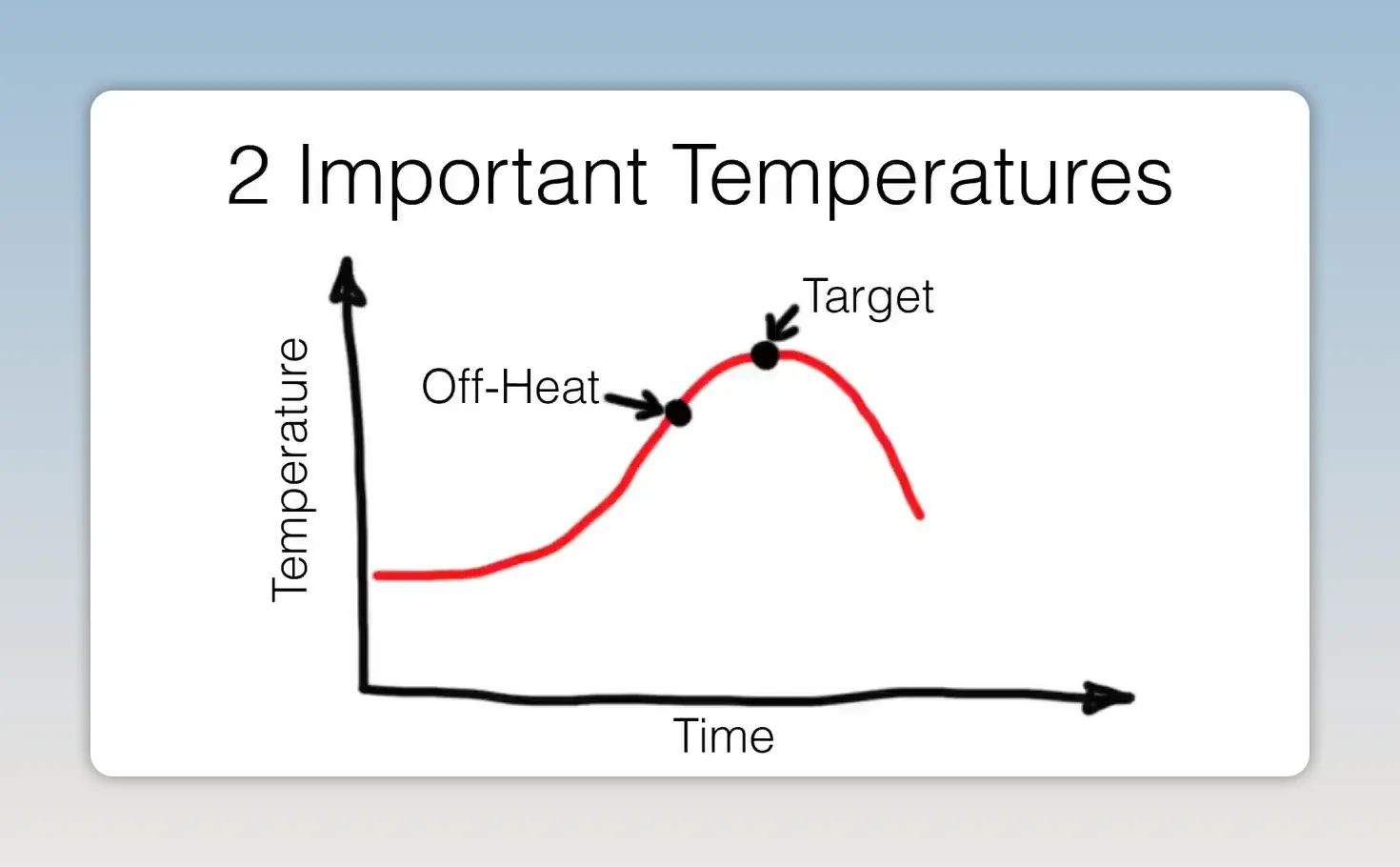
Before testing fish with a thermometer, we need to distinguish between two numbers:
- Off-heat temperature: The temperature when you remove the fish from the heat.
- Target temperature: The highest temperature you want the fish to reach as it rests.
These are not the same. Fish continues cooking after it leaves the pan or oven, so the off-heat temperature can be considerably lower than the final target. This rise is called carryover cooking.
Since I didn't normally measure my fish, I didn't know either number for my preferred doneness. I knew the USDA recommendation was 145°F, but I suspected that my preferred texture, particularly for salmon, happened at a lower temperature. Would it be 135°F? 125°F? Would each fish need a different target?
A food-safety distinction: The lower temperatures discussed below describe my personal texture preferences, not official safety recommendations. The federal safe minimum internal temperature chart lists 145°F for fish. Visual doneness and a preferred texture are not proof that fish has reached that temperature.
My experiment was simple: cook each fish until it passed my usual visual test, immediately measure its internal temperature, and then leave the thermometer in for five minutes to see how much the temperature rose. At least, that was the plan. I missed one measurement, as you'll see.
What Happened with Salmon, Swordfish, and Cod
Salmon: 109°F Off the Heat, 124°F After Resting
I broiled the salmon, then finished it in a 350°F oven. I stopped cooking when the flakes separated but the center was still orange and translucent.
That turned out to be only 109°F at the moment I took it off the heat. After five minutes of resting, it reached about 124°F, a rise of 15 degrees.
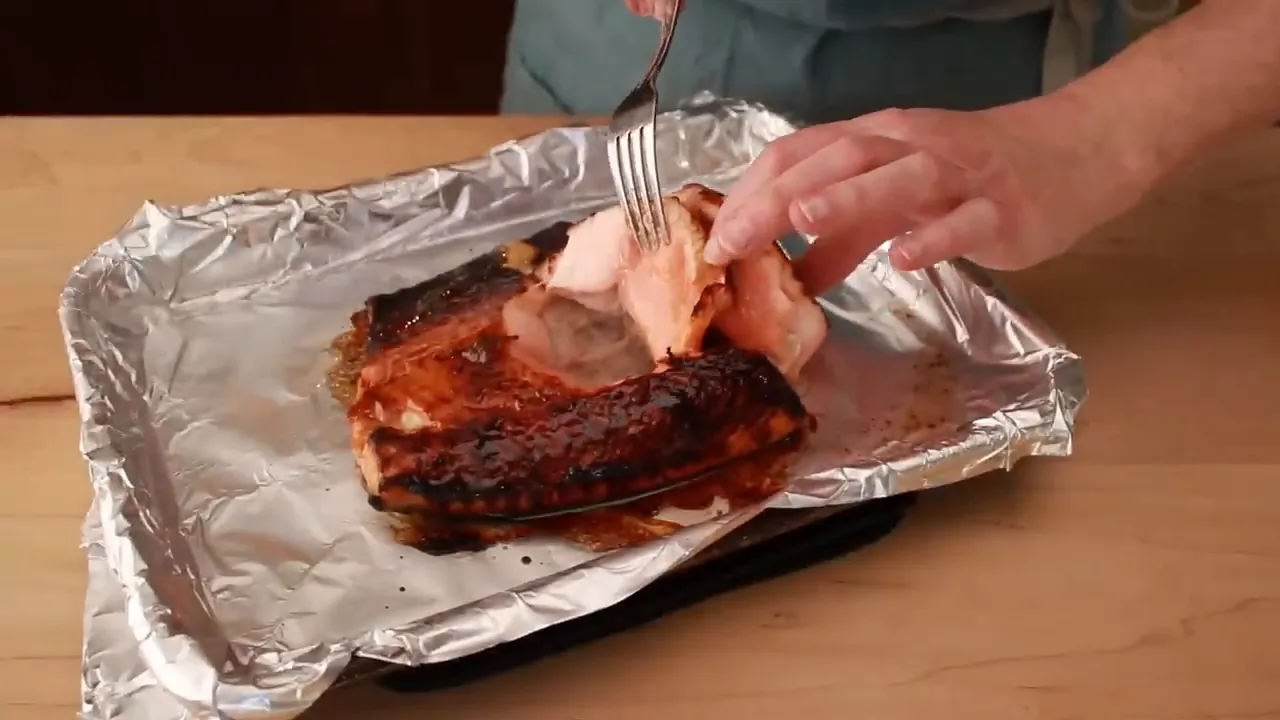
The important detail is that I wasn't waiting for the center to look fully cooked before removing it. The salmon looked significantly more cooked after its rest. If I had waited for that final appearance while it was still in the oven, it would have continued cooking beyond the texture I wanted.
Swordfish: 111°F Off the Heat, 131°F After Resting
I seared the swordfish on both sides, giving each side about three to four minutes.
Swordfish doesn't separate into flakes the way salmon and cod do, so I made a small cut in the thickest part to inspect the center. At this stage, I wanted it to still look raw inside, allowing for the cooking that would happen during rest.
The off-heat temperature was about 111°F. Five minutes later, it had climbed to 131°F. That's a 20-degree increase, even more than the salmon.
The fish had been exposed to fairly high, direct heat on both sides. That cooking method made a substantial difference to what happened after it left the pan.
Cod: 139°F Off the Heat, Yet Still Moist
Cod has a tendency to dry out and fall apart, so I wanted a gentler approach with plenty of protection around it.
I placed it on a layer of lemon slices and heavy cream, topped it with buttered breadcrumbs, and baked it at 400°F just until the flakes separated.
The thermometer read a whopping 139°F. After the salmon and swordfish results, I thought I must have overcooked it. But the cod was beautifully moist and tender.
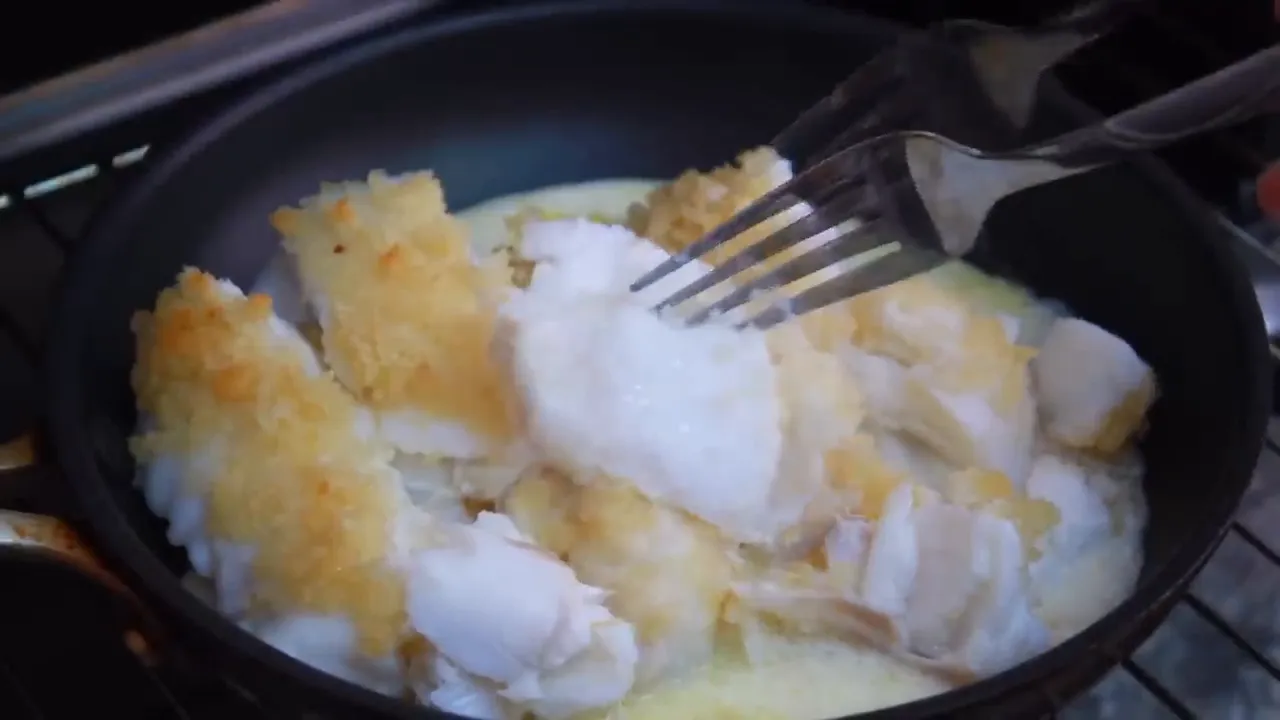
Unfortunately, I forgot to measure how much its temperature rose during rest. I can't give you that number. What I can say is that its appearance changed very little, unlike the salmon and swordfish, which both looked noticeably more cooked after resting.
What Temperature Should You Target for Fish?
For the textures I prefer, these are the final temperatures after resting, not the temperatures at which I would remove the fish from the heat:
- Salmon: 120 to 125°F, approximately 49 to 52°C.
- Swordfish: 130 to 135°F, approximately 55 to 57°C.
- Cod: 140 to 145°F, approximately 60 to 63°C.
Again, these are culinary preferences. They should not be confused with the official 145°F food-safety recommendation.
The cod result was a useful reminder not to apply one fish's ideal texture to another. A temperature that would be higher than I want for salmon worked beautifully for cod in this preparation.
But even knowing your preferred final temperature doesn't answer the practical question: When should you stop cooking?
Carryover Cooking Depends on the Method
The three preparations behaved differently because they heated the fish differently.
- Swordfish received direct, fairly high heat on both sides. Its temperature rose the most during rest, from 111°F to 131°F.
- Salmon was cooked primarily from the top, then finished in the oven. Its rise was smaller, from 109°F to 124°F.
- Cod received indirect oven heat with protective layers above and below. It appeared to change the least during rest, though I didn't measure its final temperature.
Notice that the cod's oven was hotter than the oven used to finish the salmon. The oven setting alone doesn't tell you how much carryover cooking to expect. The way heat reaches the fish, and the ingredients surrounding it, matter too.
Thickness adds another variable. An off-heat temperature that works for one piece and cooking method is not automatically a universal instruction for that species.
Why I Still Prefer a Fork, with One Exception
Personally, I find a fork, or another equally primitive tool, simpler for judging my preferred fish texture.
I don't want to memorize target temperatures for every kind of fish and then work out how much each piece might rise based on its exact thickness and cooking method. For fish that flakes, gently separating the flakes and looking inside is more straightforward for me.
That doesn't mean waiting until every part looks fully cooked. The salmon test is a good example: I stop when the flakes separate while the center is still translucent because I know it will continue cooking during rest.
Swordfish is the exception where I find a thermometer particularly useful. It's typically thick enough to measure, doesn't offer the same flaking cue, and is commonly cooked over direct, high heat.
If making a little inspection cut bothers your sense of aesthetics, my suggested starting point for a similar 1-inch-thick, high-heat preparation is to remove the swordfish at around 115°F and let it rest toward 135°F. That's slightly higher than the 111°F off-heat and 131°F final temperatures I measured in this test. I thought that piece could have used just a little more cooking.
The experiment didn't persuade me to abandon my fork. It did show why a single fish-doneness temperature isn't enough: the species, the cooking method, and the rest all affect the result. For my everyday cooking, a small peek inside remains the simplest way to judge the texture I'm after.
|


