Finding a worm in your fish can make you reconsider dinner rather quickly. Take a deep breath. Just as a beautiful head of local, organic lettuce can come with a caterpillar, a piece of fish can come with a parasite. Unappetizing? Certainly. A reason to panic? No.
The important distinction is how you plan to serve the fish. Proper cooking kills fish parasites. Raw or cured fish requires a different set of precautions, and pulling out the worms you can see is not enough to make it safe. Here, we are dealing with fish destined for cooking, specifically a monkfish tail with a few unexpected guests.
What Are Those Little Worms?
The little fellow crawling out of my monkfish tail is commonly called a cod worm. As the name suggests, cod is prone to these parasites, but it is hardly alone. They can also turn up in:
- Hake
- Haddock
- Flounder
- Sole
- Halibut
- Monkfish
They are not always the same color, either. These worms can be cream-colored, red, pink, or brown. Mine happens to be brown. Apparently, dinner comes with a little variety.
Fishmongers try to remove visible worms before selling the fish, but finding every one is not always possible. A monkfish tail, for example, is encased in a membrane. Some worms are difficult to reach until that membrane is removed. Finding one at home does not automatically mean the fishmonger was careless.
How to Remove Worms from Fish
You do not need elaborate equipment. Tweezers work nicely. Your fingers will also do, if you are not the squeamish type.
- Remove the membrane, if necessary. On monkfish, this gives you access to worms that may be trapped beneath it.
- Grasp the visible worm. Use tweezers or your fingers and pull it out of the flesh.
- Expose a buried worm carefully. If one is tucked just inside the flesh, make a small cut with a knife so you can reach it, then pull it out.
- Inspect the surrounding flesh. Remove any other visible worms before cooking.
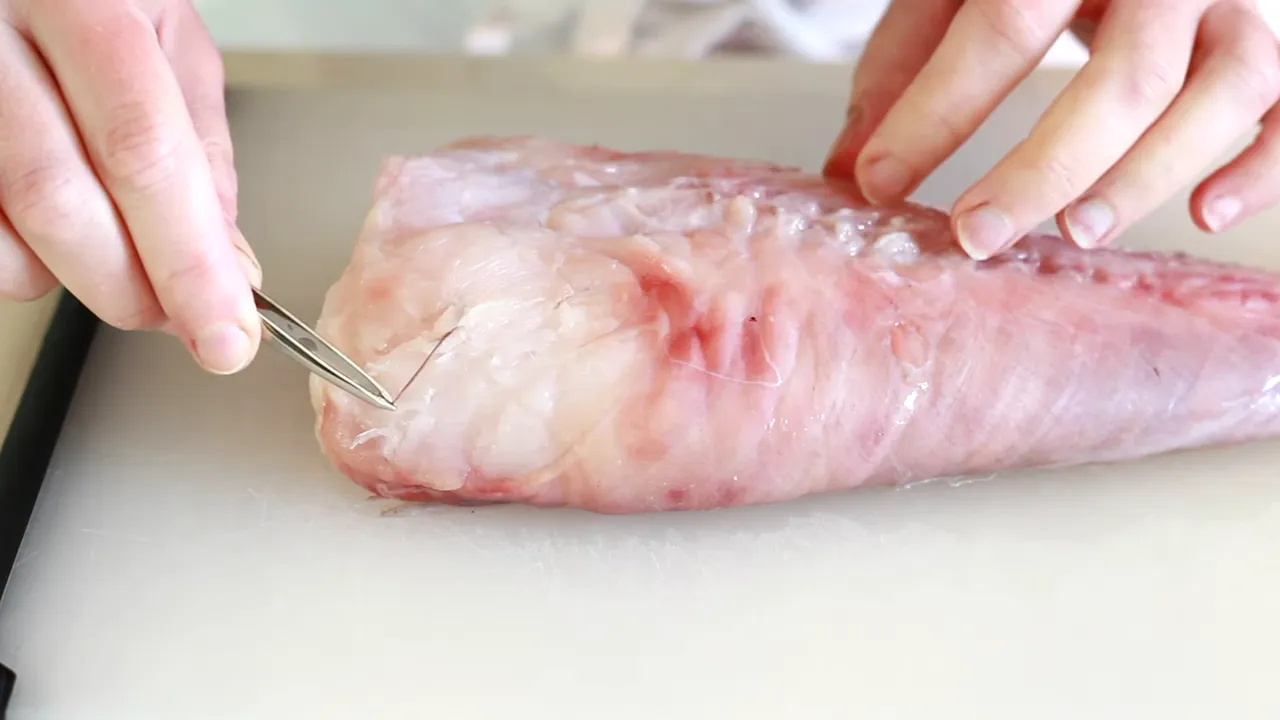
In my monkfish, the first little guest has a friend hiding inside. A small cut gives me access to the second one. This is a modest bit of fish preparation, not a reason to carve the whole tail into confetti.
Not Every Line in the Fish Is a Worm
Once you find your first worm, every line in the fish begins to look suspicious. Surely that one is about to crawl away, too?
Remember that fish contains connective tissue and blood vessels. A line that does not move and does not pull free when gently tugged is more likely to be part of the fish. That is a useful preparation clue, not a test that proves the fish is parasite-free.
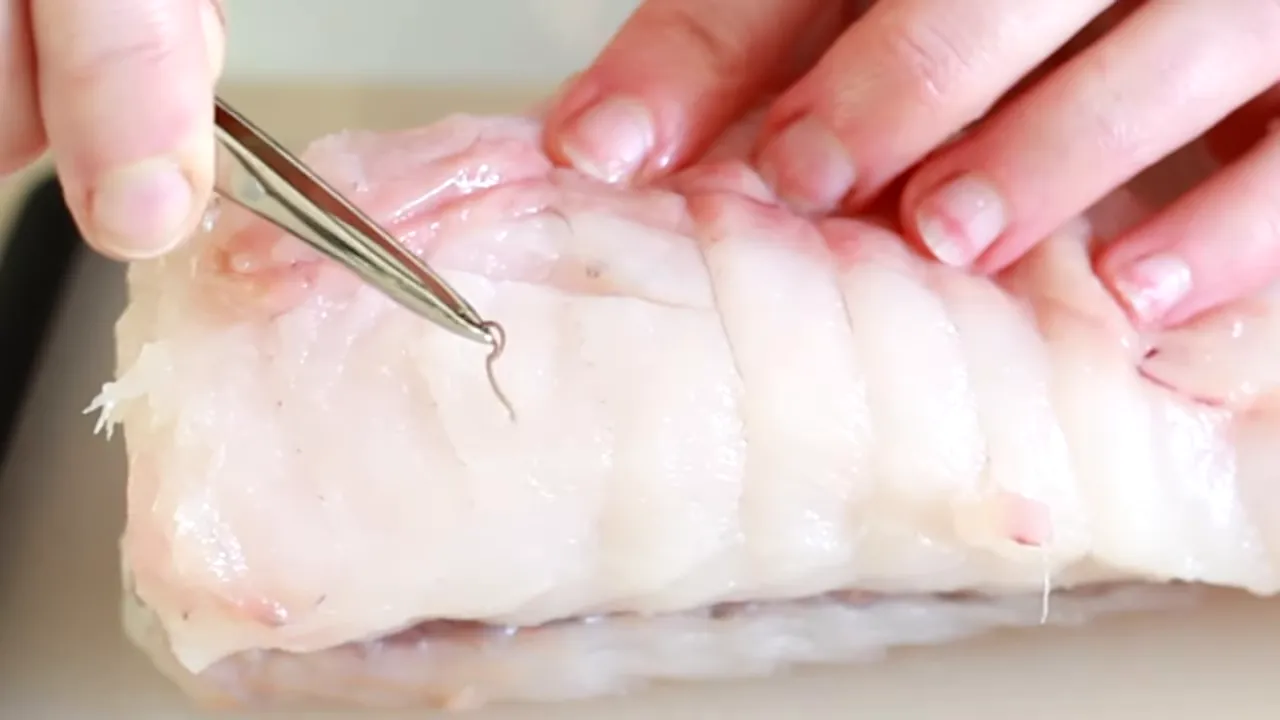
What If You Miss a Worm?
This is where cooking matters. Removing visible worms is not a substitute for cooking the fish properly. A live parasite in raw or undercooked fish can cause illness; adequate cooking kills it.
Do you need to punish your fish by cooking it until it is dry? No. But do not rely on a quick sear or assume that merely warming a parasite makes it harmless. The FDA’s seafood safety guidance recommends cooking most seafood to an internal temperature of 145°F.
Raw and cured preparations are a separate subject. Do not apply this simple remove-and-cook approach to fish you intend to serve uncooked.
A Worm Does Not Mean the Fish Is Not Fresh
If the discovery has completely ruined your appetite, you can discuss returning the fish with your fishmonger. Please be respectful and discreet. There is no need to announce your discovery to everyone at the counter, or sarcastically explain that you thought the shop sold fresh fish.
Parasites are not, by themselves, evidence that fish is old. Chefs sometimes joke that if the worms are moving, at least the fish is fresh. That is a joke, not a freshness test, but the point stands: parasites and spoilage are different issues.
As for my monkfish, I removed the worms, cooked it, and enjoyed a delicious dinner. A week later, I was still perfectly well. One dinner is not a scientific study, of course, but it does explain why I refuse to let these little fellows have the last word.
For additional discussion, see my notes on worms in fish.
And if you are ever near Boston, come cook with me. We will prepare many things, not just worms.
|


